
Madras Regiment | The Thambis of India
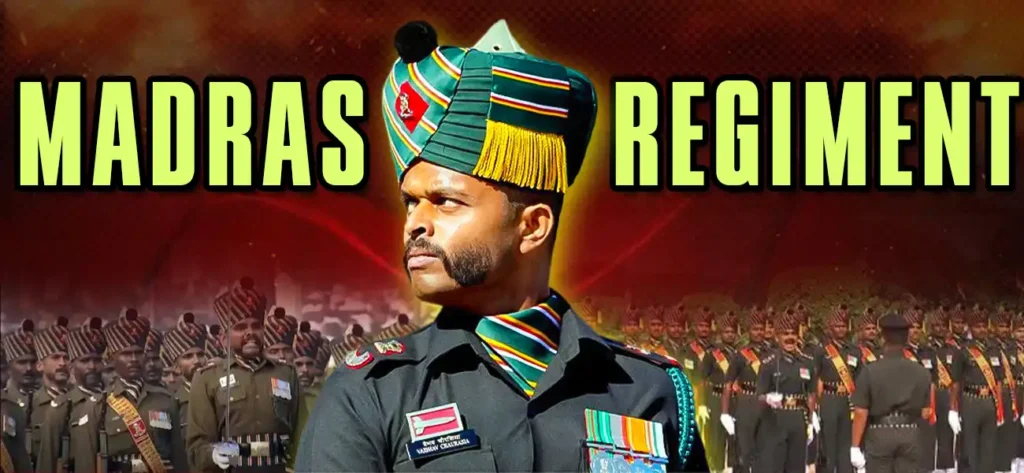
A Deep Dive into the Legacy of the Madras Regiment
In the diverse tapestry of the Indian Army, the Madras Regiment holds a position of unique distinction. As the oldest infantry regiment of the Indian Army, its history is a masterclass in resilience, loyalty, and sheer combat prowess. Often referred to by the affectionate term “Thambis” (meaning ‘younger brother’ in Tamil), the soldiers of this regiment have proven their mettle from the Carnatic Wars of the 18th century to the high-altitude battlefields of the 21st century.
1. A History Born in the South (1758)
The formal history of the Madras Regiment dates back to December 4, 1758, when two battalions were raised by Sir Robert Clive (Lord Clive) during the Carnatic Wars. However, its roots go even deeper, tracing back to the Nair Brigade (raised in 1704) and the “Coast Sepoys” who were renowned for their discipline and tactical flexibility.
Over nearly three centuries, the regiment has evolved through various incarnations under the British East India Company and the British Indian Army, eventually becoming a cornerstone of the modern Indian Army’s infantry.
2. The Identity: Motto, War Cry, and Insignia of Madras Regiment
Every element of the Madras Regiment’s identity is steeped in history and spiritual resolve.
The Motto: “Swadharme Nidhanam Shreyaha” (It is a glory to die doing one’s duty). Derived from the Bhagavad Gita, this motto reflects the soldier’s ultimate commitment to their ‘Dharma’ or duty.
The War Cry: “Veera Madrassi, Adi Kollu, Adi Kollu!” (Brave Madrassi, Strike and Kill, Strike and Kill!). This thunderous cry has echoed across global battlefields, from the trenches of World War I to the dense jungles of Burma.
The Insignia: The regimental badge features two elephants with crossed swords, surrounding a shield. The elephants represent the Battle of Assaye (1803), where the regiment’s bravery so impressed the Duke of Wellington (Arthur Wellesley) that he granted them the honor of using the elephant symbol.
3. Iconic Battles: From Assaye to Basantar
The “Thambis” have a “Wall of Honour” that few can match, with 45 Battle Honours and 14 Theatre Honours.
Battle of Assaye (1803): Outnumbered by the Maratha forces, the Madras units displayed such exceptional courage that the elephant became their eternal symbol.
Battle of Tithwal (1947-48): Post-independence, the regiment played a pivotal role in Jammu & Kashmir, earning the Battle Honours of Tithwal and Poonch.
Battle of Basantar (1971): During the Indo-Pak war, the Madras Regiment displayed legendary grit in the Shakargarh sector. Their ability to hold ground under heavy artillery fire was instrumental in India’s victory on the Western Front.
Recent Contributions (2025-2026): In early 2026, battalions of the Madras Regiment have continued to excel in counter-insurgency operations in the Northern Command and have been recognized for their humanitarian assistance during UN Peacekeeping missions in Africa.
4. The Regimental Centre: Wellington, Tamil Nadu
The heart of the regiment beats in the serene Nilgiri Hills. The Madras Regimental Centre (MRC) is located in Wellington, near Coonoor, Tamil Nadu. Established here in 1947, it is one of the most beautiful military training centers in the world.
It is here that young recruits from the five southern states—Tamil Nadu, Kerala, Karnataka, Andhra Pradesh, and Telangana—are transformed into elite “Thambis.” The training focuses on mountain warfare, physical endurance, and the unique cultural integration that defines the unit.
5. Why Choose the Madras Regiment?
Joining the Madras Regiment means joining a family that values brotherhood (the ‘Thambi’ spirit) above all else. For an officer, leading these troops is considered a privilege because of their:
Extreme Discipline: Known for staying calm under the most intense pressure.
Adaptability: Equally effective in the deserts of Rajasthan, the jungles of the North-East, or the glaciers of Siachen.
Legacy: Carrying forward a tradition of excellence that predates the very idea of a unified India.
Be Part of the Legend
If you are preparing for your defense exams, remember that you aren’t just studying for a job; you are preparing to lead men who carry 270 years of glory on their shoulders. To ensure you have the best start, choose the best NDA coaching in India that provides not just academic knowledge, but a deep understanding of the military heritage you are about to inherit.
“Swadharme Nidhanam Shreyaha” — Duty above all.
Frequently Asked Questions (FAQs) For Madras Regiment
Q1: Which is the oldest infantry regiment in the Indian Army? A: The Madras Regiment is officially the oldest infantry regiment of the Indian Army, with its formal raising dating back to 1758.
Q2: What is the significance of the elephant in the Madras Regiment’s logo? A: The elephant was awarded as a battle honor following the Battle of Assaye in 1803. Arthur Wellesley (later the Duke of Wellington) was so impressed by the Madras soldiers that he authorized the elephant symbol to be used on their colors.
Q3: Where is the Madras Regimental Centre (MRC) located? A: The MRC is located at Wellington, Tamil Nadu, in the Nilgiri Hills.
Q4: Who are the “Thambis”? A: “Thambi” is the Tamil word for “younger brother.” It is the affectionate and proud nickname used for the soldiers of the Madras Regiment, symbolizing the close-knit brotherhood of the unit.
Q5: What are the primary recruitment areas for the Madras Regiment? A: The regiment primarily recruits from South India, including the states of Tamil Nadu, Kerala, Karnataka, Andhra Pradesh, and Telangana.