
The Gorkha Rifles
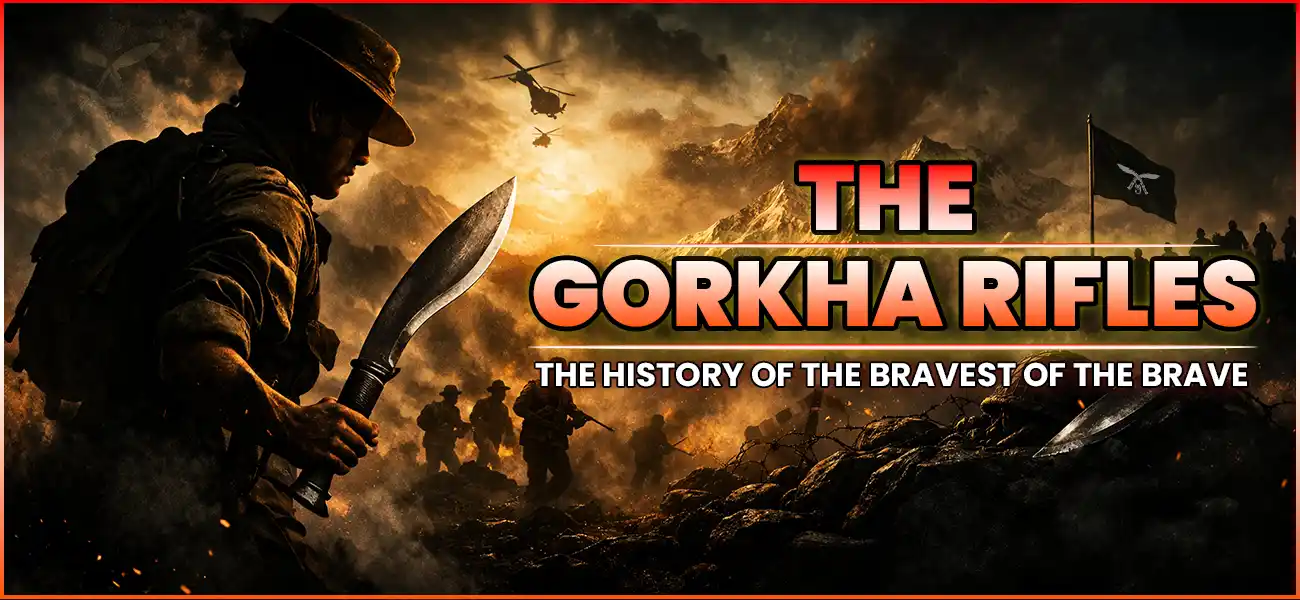
The History of the 'Bravest of the Brave' - Gorkha Rifles
If there is one name that strikes both respect and fear on the battlefield, it is the Gorkha Rifles. Known globally for their unwavering courage, fierce loyalty, and the iconic Khukri, the Gorkha soldiers have been an integral part of the Indian Army for over two centuries.
At Indian Defence Academy (IDA) Dehradun, we believe that every aspirant aiming for the best NDA coaching in India should understand the legendary history of the regiments they aspire to lead.
The Origin A Respect Born in Battle (1815) - Gorkha Rifles
The history of the Gorkhas in the Indian subcontinent began not with a friendship, but with a fierce conflict. During the Anglo-Nepalese War (1814–1816), the British East India Company was so impressed by the fighting spirit and “dogged bravery” of the Gorkha soldiers that they decided to recruit them into their own ranks.
Under the Treaty of Sugauli (1816), the first Gorkha units were raised. Following India’s independence in 1947, a tripartite agreement between India, Nepal, and the UK led to six Gorkha regiments joining the Indian Army, with a seventh (11 Gorkha Rifles) being raised shortly after.
The Spirit of the Gorkha Rifles: Motto and War Cry
The ethos of a Gorkha soldier is captured in their chilling yet inspiring war cry and their uncompromising motto.
The Motto: “Kayo Bir Thanda Jai Maraunu Jati” (Better to die than live like a coward).
The War Cry: “Jai Mahakali, Ayo Gorkhali!” (Victory to Goddess Mahakali, the Gorkhas are here!). This cry has heralded victory in every major conflict India has faced.
The Iconic Weapon: The Khukri
No Gorkha soldier is complete without the Khukri—a curved, heavy-bladed knife. It is not just a weapon; it is an extension of the soldier’s arm and a symbol of their heritage. Tradition says that once a Khukri is drawn in battle, it “must taste blood” before being sheathed. In modern warfare, the Gorkhas have used the Khukri to devastating effect in close-quarter combat.
A Legacy of Valor: Victoria Crosses and Param Vir Chakras
The Gorkha Rifles is one of the most decorated entities in military history.
Victoria Cross (VC): Before independence, Gorkha soldiers earned a staggering 26 Victoria Crosses, the highest British award for gallantry.
Param Vir Chakra (PVC): In independent India, the tradition of valor continued. Major Dhan Singh Thapa (8 GR) and Captain Manoj Kumar Pandey (11 GR) are among the legendary PVC recipients who made the ultimate sacrifice for the nation.
The Manekshaw Connection
Perhaps the greatest tribute to the Gorkhas came from Field Marshal Sam Manekshaw, an officer of the 8 Gorkha Rifles, who famously said:
“If a man says he is not afraid of dying, he is either lying or he is a Gorkha.”
The “Sam Bahadur” legacy remains a guiding light for every student at IDA Dehradun, where we prepare you to lead such legendary men.
The 7 Gorkha Regiments of the Indian Army
Today, the Indian Army proudly hosts seven Gorkha Regiments, each with its own history:
1 Gorkha Rifles (The Malaun Regiment)
3 Gorkha Rifles
4 Gorkha Rifles
5 Gorkha Rifles (Frontier Force)
8 Gorkha Rifles
9 Gorkha Rifles
11 Gorkha Rifles (Raised post-independence)
To lead a Gorkha unit is considered one of the highest honors for an officer in the Indian Army. It requires not just tactical brilliance, but a deep bond of mutual respect. This is why our mentors, like Lt. Col. HDS Bisht (Retd), focus on building your character and Officer Like Qualities (OLQs) from day one.
If you dream of shouting “Ayo Gorkhali!” on the battlefield, start your journey with the best NDA coaching in India at Indian Defence Academy Dehradun.
Frequently Asked Questions (FAQs) - Gorkha Regiments
Q1: Can an Indian citizen join the Gorkha Rifles? A: Yes. While many Gorkha soldiers are recruited from Nepal (Domicile Gorkhas), the Indian Army also recruits Indian Gorkhas from regions like West Bengal (Darjeeling), Himachal Pradesh, Uttarakhand, and the North-East. Officers, however, can be from any part of India.
Q2: Which Gorkha Regiment did Sam Manekshaw belong to? A: Field Marshal Sam Manekshaw was a proud officer of the 8 Gorkha Rifles.
Q3: What is the significance of the “11 Gorkha Rifles”? A: It is the only Gorkha regiment raised by independent India (in 1948) specifically for those Gorkhas who chose to stay with the Indian Army rather than go to the British Army.
Q4: Where is the training center for Gorkha soldiers? A: There are multiple training centers, such as the Gorkha Training Centre (GTC) in Shillong and Sabathu (Himachal Pradesh).
Q5: Is it true that Gorkhas are the only ones allowed to carry a Khukri? A: The Khukri is part of the official uniform for Gorkha soldiers and officers. It is a ceremonial as well as a functional combat weapon unique to their regiment.