
Sikh Regiment | The Unstoppable Valour
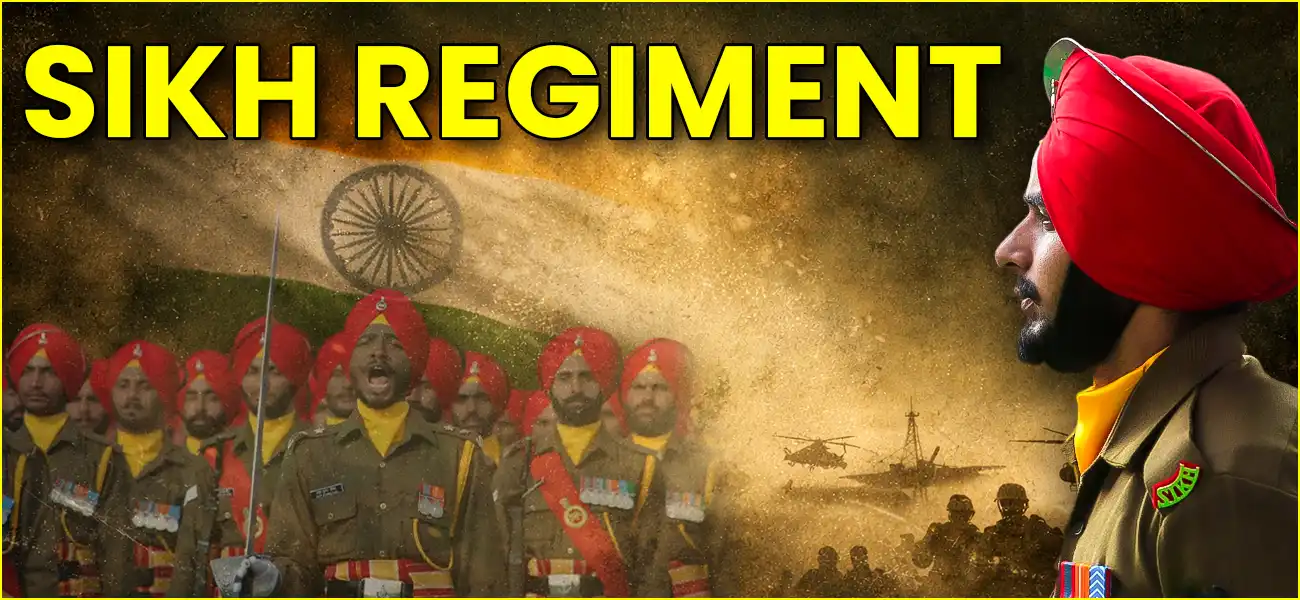
A Deep Dive into the Sikh Regiment
In the annals of military history, few names command as much respect and awe as the Sikh Regiment of the Indian Army. Known as the “Lions of the East,” this regiment is not just a combat unit; it is a living testament to a 180-year-old legacy of courage, spirituality, and unyielding discipline.
Whether you are a defense aspirant or a history enthusiast, understanding the Sikh Regiment is essential to understanding the grit that defines the Indian Armed Forces.
1. The Genesis: From the Khalsa to the Sikh Regiment
The Sikh Regiment traces its roots back to August 1, 1846, shortly after the First Anglo-Sikh War. The British, impressed by the fierce fighting spirit of the Khalsa Army, raised the first battalions—the Regiment of Ferozepore and the Regiment of Ludhiana.
Over the decades, these units evolved, eventually forming the 11th Sikh Regiment in 1922, and finally becoming the Sikh Regiment of independent India. Today, with its headquarters at Ramgarh Cantonment in Jharkhand, it stands as one of the oldest and most prestigious infantry regiments in the country.
2. The Spiritual Strength: Motto and War Cry
What makes a Sikh soldier stand firm against overwhelming odds? The answer lies in their ethos, which blends military training with the spiritual teachings of the Sikh Gurus.
The Motto: “Nische Kar Apni Jeet Karon” (With determination, I shall be triumphant). These words are taken from the writings of Guru Gobind Singh Ji, emphasizing that victory is a result of unwavering resolve.
The War Cry: “Jo Bole So Nihal, Sat Sri Akal” (He who cries God is the Ultimate Truth, shall be blessed). This thunderous cry has echoed across battlefields from the trenches of France to the heights of Kargil, striking fear into the hearts of adversaries
3. Saragarhi: The Greatest Last Stand in History
You cannot talk about the Sikh Regiment without mentioning the Battle of Saragarhi (September 12, 1897). In a display of bravery that is often compared to the Battle of Thermopylae, 21 soldiers of the 36th Sikhs (now 4th Sikh) defended a small signaling post against an estimated 10,000 to 12,000 Afghan tribesmen.
Led by Havildar Ishar Singh, every single soldier chose to fight to the death rather than surrender. Their sacrifice was so profound that the British Parliament gave them a standing ovation, and all 21 were posthumously awarded the Indian Order of Merit (IOM)—the highest gallantry award available to Indian soldiers at the time. To this day, September 12 is celebrated as the Regimental Battle Honours Day.
4. The Most Decorated Regiment - Sikh Regiment
The Sikh Regiment is widely recognized as the most decorated regiment in the Indian Army (and the Commonwealth). Their “Wall of Honor” is staggering, boasting over 1,650 gallantry awards, including:
2 Param Vir Chakras (PVC): Awarded to Lance Naik Karam Singh (1947-48) and Subedar Joginder Singh (1962).
14 Victoria Crosses (VC): Earned during the World Wars.
4 Ashok Chakras (AC)
8 Maha Vir Chakras (MVC) (with some records citing up to 14 including pre-independence equivalencies).
75 Battle Honours and 38 Theatre Honours.
Even in recent times, the regiment continues to excel. In January 2026, seven battalions of the Sikh Regiment were felicitated on Army Day for their outstanding operational effectiveness and exemplary performance in counter-insurgency and border mission
5. Beyond the Battlefield: Identity and Recruitment
The regiment is a “single-class” regiment, primarily recruiting Jat Sikhs from the Punjab region. The soldiers are easily identifiable by their proud turbans and the Chakra (quoit) on their regimental cap badge, which surrounds a lion—symbolizing the “Singh” (Lion) in every Sikh.
Beyond their combat roles, the regiment has contributed significantly to Indian sports and ceremonial duties. The 6th Battalion, for instance, has the prestigious honor of serving as the ceremonial battalion at the President’s House (Rashtrapati Bhavan).
Sikh Regiment - A Legacy for the Future
The Sikh Regiment is more than just a military unit; it is a symbol of the “Saint-Soldier” (Sant-Sipahi) concept. For the youth of Punjab and India, the regiment remains a beacon of pride. Despite the shifting landscapes of modern warfare and recruitment, the core values of the Sikh Regiment—Seva (Service), Simran (Remembrance), and Sahas (Courage)—remain as relevant today as they were in 1846.
“Nische Kar Apni Jeet Karon” — A promise kept by the Lions of the East, yesterday, today, and forever.
Frequently Asked Questions (FAQs) – Sikh Regiment
Q1: When was the Sikh Regiment officially raised?
A: The Sikh Regiment was officially raised on August 1, 1846. It was formed from the remnants of the Khalsa Army after the First Anglo-Sikh War, starting with the 1st Sikh (Regiment of Ferozepore) and 2nd Sikh (Regiment of Ludhiana).
Q2: Where is the Regimental Centre of the Sikh Regiment located?
A: The Sikh Regimental Centre (SRC) is located at Ramgarh Cantonment in Jharkhand. It moved there from Meerut in 1976. This is where all new recruits undergo their rigorous basic training.
Q3: What is the War Cry and Motto of the Sikh Regiment? *
Motto: “Nische Kar Apni Jeet Karon” (With determination, I shall be triumphant).
War Cry: “Jo Bole So Nihal, Sat Sri Akal” (He who cries God is the Ultimate Truth, shall be blessed).
Q4: Why is the Sikh Regiment called the “Most Decorated Regiment”?
A: The Sikh Regiment holds the distinction of being the highest-decorated regiment in the Indian Army (and formerly the British Empire). Over its history, it has amassed over 1,650 gallantry awards, including 2 Param Vir Chakras, 14 Victoria Crosses, and 8 Maha Vir Chakras.
Q5: What was the Battle of Saragarhi?
A: Fought on September 12, 1897, it is one of the greatest “last stands” in military history. 21 soldiers of the 36th Sikhs defended a communications post against 10,000 Afghan tribesmen. All 21 soldiers fought to the death and were posthumously awarded the Indian Order of Merit (IOM).
Q6: Can non-Sikhs join the Sikh Regiment?
A: Recruitment for the Soldier (Jawan) rank in the Sikh Regiment is primarily restricted to Jat Sikhs. However, the Officers can belong to any religion or region of India. It is a common tradition for non-Sikh officers in the regiment to grow beards and wear turbans out of respect for the troops they lead.
Q7: How many battalions does the Sikh Regiment currently have?
A: As of 2026, the Sikh Regiment consists of 20 regular battalions and several Territorial Army (TA) battalions. The 6th Battalion (the “Garvi Sixth”) currently holds the honor of being the ceremonial unit at the Rashtrapati Bhavan.
Q8: What is the significance of the “Chakra” on the regimental cap badge?
A: The regimental badge features a Chakra (a traditional Indian throwing weapon) surrounding a Lion. The Chakra represents the traditional weapons of the Khalsa, while the Lion represents the “Singh” (Lion) identity of the Sikh soldier.
Q9: Does the Sikh Regiment have a special day of celebration?
A: Yes, September 12 is celebrated as Saragarhi Day (Regimental Battle Honours Day) across all battalions to honor the 21 brave hearts of Saragarhi.