
How to Become an Army Doctor in India – Complete Guide (2026)
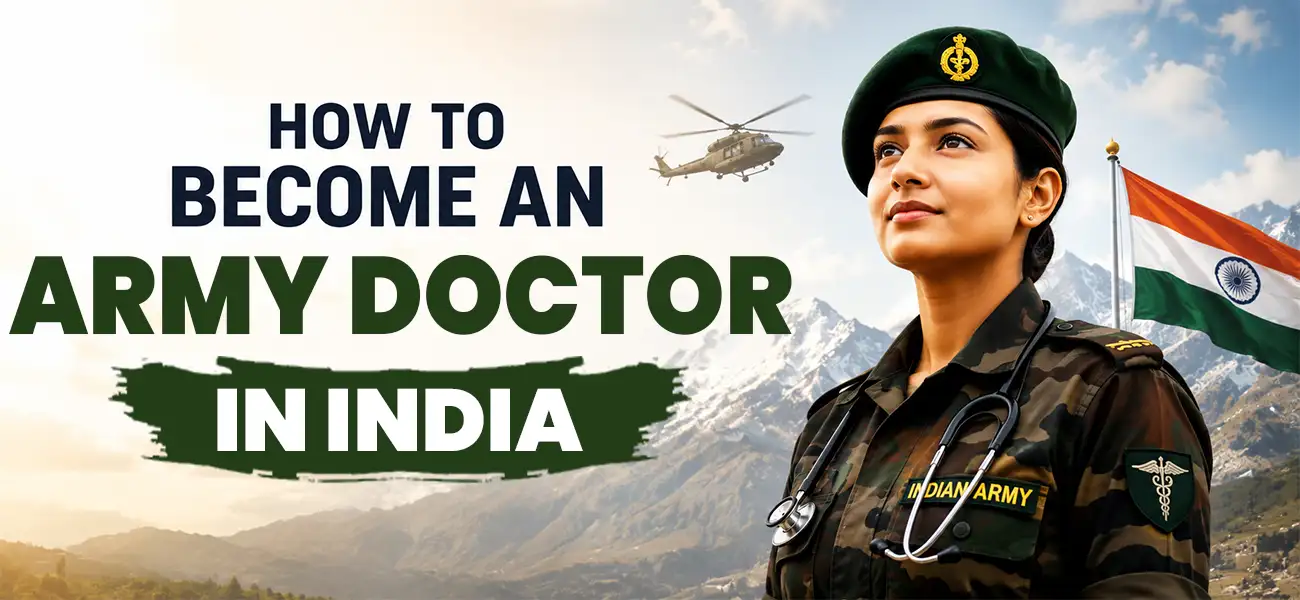
Dreaming of Wearing the Uniform? Here’s How to Become an Army Doctor in India
Becoming an Army Doctor in India is one of the most respected and prestigious career paths for medical aspirants. An Army doctor serves the nation by providing healthcare services to soldiers, officers, veterans, and their families while also enjoying the pride, discipline, salary, and lifestyle of the Indian Armed Forces.
In India, Army doctors work under the Armed Forces Medical Services (AFMS), which includes:
- Indian Army Medical Corps
- Indian Navy Medical Branch
- Indian Air Force Medical Branch
If you dream of wearing the uniform while practicing medicine, this detailed guide will explain everything you need to know.
What Does an Army Doctor Do?
An Army doctor is a commissioned medical officer who:
- Treats military personnel and their families
- Works in military hospitals and field units
- Handles emergency and trauma care
- Participates in medical missions during war and disasters
- Serves in high-altitude and remote areas
- Maintains soldiers’ health and fitness
Army doctors may serve in:
- Military hospitals
- Field hospitals
- Border areas
- Peacekeeping missions
- Research centers
- Training institutions
Types of Army Doctors in India
There are mainly two types:
1. Permanent Commission Medical Officer
- Long-term career in Armed Forces
- Promotions and pension benefits
- Stable military medical career
2. Short Service Commission (SSC) Doctor
- Limited service period (usually 5–14 years)
- Good for doctors wanting military experience
Eligibility to Become an Army Doctor in India
Educational Qualification
You must:
- Pass Class 12 with PCB (Physics, Chemistry, Biology)
- Qualify NEET-UG
- Complete MBBS from a recognized medical college
- Register with NMC (National Medical Commission)
Main Ways to Become an Army Doctor
There are mainly 3 major pathways.
1. Through AFMC Pune (Best & Most Popular Route)
What is AFMC?
Armed Forces Medical College is India’s premier military medical college.
Students study MBBS while receiving military training and later join AFMS as doctors.
Eligibility for AFMC MBBS
You must:
- Pass 12th with PCB
- Score minimum required marks
- Qualify NEET-UG
- Be medically fit
Minimum Marks
Usually:
- 60% in PCB
- 50% in English
(Cutoffs may vary yearly.)
Admission Process in AFMC
Step 1 – Appear for NEET-UG
NEET score is mandatory.
Step 2 – Apply for AFMC
After NEET results, AFMC registration opens.
Step 3 – Screening Process
Shortlisted candidates undergo:
- TOELR (Test of English Language, Comprehension, Logic & Reasoning)
- Psychological assessment
- Personal interview
- Medical examination
Step 4 – Final Merit List
Selection is based on:
- NEET score
- Interview performance
- Screening marks
- Medical fitness
MBBS Duration in AFMC
- 4.5 years academic training
- 1 year internship
Total: 5.5 years
Students also receive:
- Military discipline training
- Physical training
- Officer-like development
Bond & Service Requirement
AFMC students generally sign a service bond.
After MBBS:
- Candidates serve in Armed Forces Medical Services
- Service duration rules may change periodically
Benefits of Studying at AFMC
Major Advantages
Affordable Education
Tuition fees are much lower compared to private medical colleges.
Stipend
Students may receive allowances and financial support.
Guaranteed Career Opportunity
High chance of joining Armed Forces Medical Services.
Military Lifestyle
- Respect
- Discipline
- Leadership training
- Adventure opportunities
Excellent Medical Training
AFMC is considered among India’s top medical colleges.
2. Join Army After MBBS (Direct Entry)
If you already completed MBBS from another college, you can still become an Army doctor.
Short Service Commission (SSC) Medical Officer Entry
-
This is one of the most common methods.
Eligibility
You must:
- Have MBBS degree
- Complete internship
- Be registered with NMC/state medical council
- Be medically fit
Selection Process
Usually includes:
- Application form
- Shortlisting
- Interview
- Medical examination
No written exam is generally conducted for SSC Medical Officer entry.
Training After Selection
Selected candidates undergo military orientation and officer training before joining service.
Rank of Army Doctors
After joining, doctors receive officer ranks such as:
- Captain
- Major
- Lieutenant Colonel
- Colonel
- Brigadier
Promotions depend on:
- Service duration
- Performance
- Qualifications
- Experience
3. PG Doctors & Specialists Entry
Doctors with postgraduate degrees can also join.
Examples:
- MD
- MS
- DNB
- Super-specialization
Specialists are highly valued in military hospitals.
Can Female Candidates Become Army Doctors?
Yes.
Women can join:
- AFMC
- SSC Medical Officer entry
- Specialist entries
Today many female officers serve successfully in military medical services.
Age Limit
Age criteria change slightly according to entry type.
Generally:
- AFMC MBBS: around 17–24 years
- SSC Medical Officer: usually below 30–35 years
Always check official notifications for updated criteria.
Physical & Medical Fitness Requirements
Army doctors must maintain:
- Good physical health
- Proper vision standards
- Mental fitness
- Medical eligibility
Common checks include:
- Height & weight standards
- Eye examination
- General health evaluation
Salary of Army Doctors in India
Army doctors receive excellent salary packages.
Approximate Salary Structure
Starting Salary
Around ₹80,000 – ₹1.5 lakh+ per month (including allowances)
Additional Benefits
Army doctors also receive:
- Military allowances
- Free accommodation
- Healthcare benefits
- Canteen facilities
- Pension benefits (for permanent commission)
- Travel allowances
- Respect and social status
Work Environment of Army Doctors
Army doctors may work in:
- Peace stations
- Military hospitals
- Border areas
- High-altitude regions
- Emergency medical camps
The work can be demanding but highly rewarding.
Challenges of Becoming an Army Doctor
Competitive Selection
AFMC admission is highly competitive.
Discipline & Military Life
You must adapt to military rules and lifestyle.
Transfers & Remote Posting
Doctors may serve in difficult terrains.
High Responsibility
Emergency and trauma handling requires strong mental resilience.
Best Skills Required
To succeed as an Army doctor, you should have:
- Medical knowledge
- Discipline
- Leadership
- Physical fitness
- Decision-making ability
- Emotional stability
- Teamwork
Difference Between Civilian Doctor & Army Doctor
Feature Civilian Doctor Army Doctor Workplace Private/Govt hospitals Military hospitals Lifestyle Normal civilian Military discipline Uniform No Yes Transfers Limited Frequent Adventure Low High National Service Indirect Direct
Is Becoming an Army Doctor Worth It?
For candidates who want:
- Medicine + patriotism
- Respectful career
- Financial stability
- Adventure
- Leadership
…it is an outstanding career choice.
However, if someone prefers:
- Completely settled city life
- Independent private practice
- Flexible routine
then civilian medical careers may suit them better.
Step-by-Step Roadmap
After 10th
- Choose PCB in 11th
After 12th
- Prepare for NEET
Crack NEET
- Apply for AFMC OR pursue MBBS
Complete MBBS
- Internship + NMC registration
Apply for Army Medical Entry
- SSC / Permanent Commission
Clear Interview & Medicals
- Join Armed Forces Medical Services
Important Official Websites
AFMC Pune
Armed Forces Medical Services
National Medical Commission
NEET Information
Frequently Asked Questions For How to Become an Army Doctor in India
Is NEET compulsory for Army doctor?
Yes. NEET is compulsory for AFMC MBBS admission.
Can I join Army after MBBS?
Yes. You can apply through SSC Medical Officer entry.
Is there any written exam after MBBS?
Usually SSC entries mainly involve interviews and medical tests.
Do Army doctors carry weapons?
Generally, their primary role is medical service, not combat.
Can Army doctors do specialization?
Yes. Many Army doctors pursue MD/MS and super-specialization.
Becoming an Army doctor in India is a prestigious combination of:
- medical profession,
- military discipline,
- leadership,
- and national service.
Whether through Armed Forces Medical College or direct SSC entry after MBBS, the journey requires dedication, hard work, fitness, and commitment to serving the country.
For students passionate about medicine and patriotism together, this can be one of the most fulfilling careers in India.